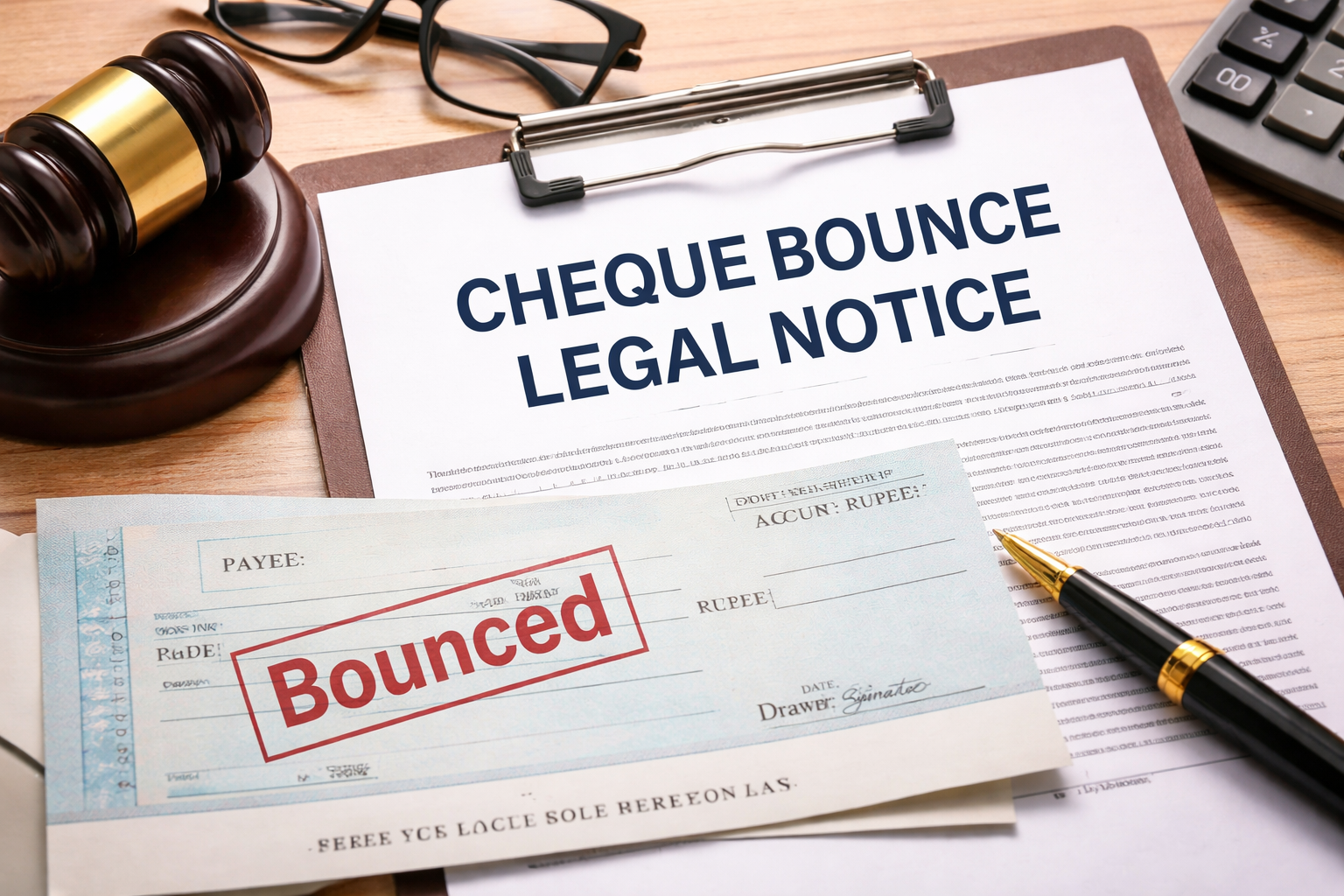
Cheque Bounce Notice in India – Section 138 Guide
A cheque bounce can involve strict statutory timelines. Understand the notice process, preserve your evidence and prepare your next step carefully.
Generate AI Legal Notice Draft Understand My Legal Problem FreeWhat Happens When a Cheque Bounces?
Section 138 of the Negotiable Instruments Act, 1881 provides a legal mechanism in specified cheque-dishonour cases involving a legally enforceable debt or liability.
The statutory demand notice is an important part of this process. The relevant dates should be checked carefully before taking action.
Section 138 – Key Timeline
- The cheque is presented and returned unpaid in circumstances covered by Section 138.
- The payee or holder in due course must make a written demand for payment within 30 days of receiving information from the bank regarding dishonour.
- After receiving the notice, the drawer has 15 days to make payment.
- If payment is not made within that period, the statutory cause of action may arise for filing a complaint under Section 138.
- Section 142 generally requires the complaint to be filed within one month from the date the cause of action arises, subject to the court’s power to condone delay where sufficient cause is shown.
What Should a Cheque Bounce Notice Contain?
A properly prepared notice will usually identify:
- Sender and recipient details
- Background of the transaction
- Legally enforceable debt or liability claimed
- Cheque number, date, bank and amount
- Dishonour and bank return details
- Demand for payment of the cheque amount
- Relevant statutory timeline
- Consequences of failure to make payment
Before Drafting: Check What You Can Prove
A legal notice is stronger when the facts stated in it are supported by documents and other reliable evidence.
Preserve cheque details and available copies.
Keep the dishonour memo or bank communication.
Agreement, invoice, loan record, account statement or other supporting material.
Preserve relevant emails, messages and written acknowledgements.
Ready to Prepare Your Notice?
Use VakilDost’s AI Draft Generator to prepare a personalised draft based on the information you provide.
Open AI Draft GeneratorAI-generated draft — for review. It is not automatically reviewed or approved by an advocate.
Sample Cheque Bounce Notice
You can also view the general sample notice format available on VakilDost. A sample should not be treated as a substitute for a notice prepared for the facts and dates of a specific matter.
View Sample Notice PDFWhat Happens After the Notice?
If the statutory requirements are satisfied and payment is not made within the prescribed period after receipt of notice, the next stage may involve filing a complaint before the competent court.
Read Cheque Bounce Filing ProcessFrequently Asked Questions
Is a demand notice required for a Section 138 complaint?
Section 138 contains a statutory written-demand requirement that must be satisfied
for the offence contemplated by that provision.
How much time is available to send the demand notice?
The statutory demand must be made within 30 days of receiving information from the
bank regarding return of the cheque unpaid.
How long does the drawer have to make payment?
The drawer is given 15 days from receipt of the statutory notice to make payment.
Can I use a standard sample notice?
A sample can help explain structure, but the facts, dates, transaction, cheque
information and demand should match the specific matter.
Important Disclaimer
VakilDost provides legal information and AI-assisted drafting tools. It does not guarantee any legal outcome. AI-generated content may contain errors and should be independently reviewed before legal use. Where deadlines, jurisdiction or substantial rights are involved, consider obtaining advice from a qualified legal professional.